

National Dog Day: Cannabis and Pets Safety, Plus CBD for Your Dog
National Dog Day lands on August 26, and if you’re a cannabis consumer with a dog in the house, it’s a good excuse to think about cannabis and pets safety, both the risks worth avoiding and the wellness products worth exploring. Dogs are curious by nature and their noses lead them straight to anything that smells interesting, which unfortunately includes flower, edibles, and concentrates. At the same time, more pet owners are turning to CBD specifically formulated for dogs to help with everyday stress, mobility, and comfort. Knowing the difference between what belongs in your stash and what belongs in your dog’s bowl is the whole point of this post.

Dogs process THC very differently than humans do, and their smaller body size means it takes a lot less to cause a problem. According to the ASPCA, THC exposure can make pets appear dazed, disoriented, and confused, and they can have difficulty walking and maintaining their balance. Other common signs include a slowed heart rate, low body temperature, and urinary incontinence, and while urinary incontinence isn’t a symptom of most household toxins, it’s actually a helpful clue that points specifically to marijuana exposure. Edibles carry extra risk because dogs will happily eat an entire package of gummies or a pan of infused brownies without any of the self control a person would exercise, and many edibles also contain chocolate or xylitol, which have more serious health effects for pets than the THC itself.
What Responsible Storage Actually Looks Like
Responsible cannabis storage isn’t complicated, but it does take a little intention. Keep flower, edibles, and concentrates in a container that seals well and store it somewhere your dog physically cannot reach, a high shelf, a locked drawer, or a dedicated storage box works well. Treat cannabis edibles the same way you’d treat any other medication or chocolate in the house, out of paw’s reach and never left out on a counter or coffee table where a curious nose can find it during a moment you stepped away.
It’s also worth thinking about where you consume, not just where you store. If you’re smoking or vaping, secondhand exposure can affect pets too, especially in a smaller room with poor airflow. Cracking a window or stepping outside keeps the air clearer for everyone in the house, four legged or otherwise. And if you’re hosting people who consume cannabis, it helps to give guests a quick heads up about where things need to stay so nothing ends up on a low table within tail-wagging distance.

CBD for Dogs Is Not the Same as THC
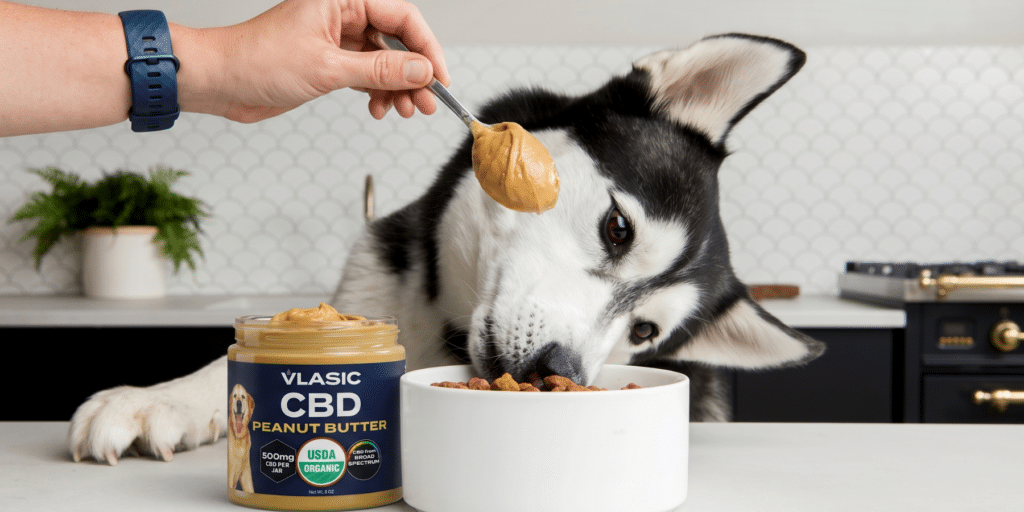
This is where it’s worth drawing a clear line. THC is the compound that causes the toxic reaction described above, but CBD is a different story entirely. CBD does not get pets high and is widely used by pet owners looking for natural support around stress, restlessness, and mobility, especially in older dogs. We carry two dedicated pet CBD lines in store, Vlasic and VetCBD, and both are formulated specifically for animals rather than repurposed from human products, which matters when it comes to dosing and ingredients your dog can actually process safely. Vlasic’s pet lineup includes CBD dog chews in a few different flavors along with an organic CBD peanut butter for pickier eaters or dogs who need something easier to work with than a treat, while VetCBD was developed by a veterinarian and offers full spectrum tinctures alongside calming and mobility focused formulas.
If you’re considering CBD for your dog for the first time, our budtenders are glad to walk you through what’s in stock and how each product is typically used, but for anything involving dosing, especially if your dog has an existing health condition or takes other medication, a quick conversation with your vet first is always the smart move. Every pet responds a little differently, and starting low and watching how your dog does is generally the right approach with any new wellness product.
If You Think Your Dog Got Into Something
If your dog does get into cannabis, staying calm helps more than panicking. Try to figure out roughly what and how much they may have consumed, since that information helps a vet assess the situation faster. It’s worth calling the professionals directly rather than guessing. The ASPCA Animal Poison Control Center is staffed 24 hours a day, 365 days a year, and can be reached at (888) 426-4435. The Pet Poison Helpline is another 24/7 option at (855) 764-7661. Both charge a consultation fee, but it’s a small price for expert guidance that can save an unnecessary emergency vet trip, or catch a serious case before it gets worse.
None of this is meant to make anyone afraid to keep cannabis in a house with a dog. Millions of pet owners do it safely every day, and keeping cannabis and pets safety in mind is really just an extension of the same common sense you’d use with any other product that isn’t meant for animals, paired with genuinely useful wellness options built for them instead. A sealed container, a spot your dog can’t reach, a couple of phone numbers saved in your contacts, and a CBD product actually made for pets covers most of what a responsible cannabis household needs.
National Dog Day is as good a reason as any to give your storage setup a quick check, save those poison control numbers, and swing by to see what Vlasic and VetCBD have in stock for your pup this week. While you’re at it, take a look at what’s on sale, our daily deals change often and it’s a good time to stock up. And if you’re due for a restock or just want to see what’s in, browse our full online menu and locations to find the NatureMed nearest you. Give your dog an extra treat today, they deserve it.
Related
